Your real question is probably this one: if I hire a developer or an accountant in Damascus, will they stay online through a normal workday? The answer in 2026 is yes, if the desk they sit at is built for the city’s power reality. No, if you hand them a laptop, wish them well and leave them on a home connection.
That is not an argument against hiring in Syria. The talent case stands on its own, and we make it in other posts. It is an argument about where the person sits, and who owns the electricity under their chair.
State power in Damascus still arrives in five-hour windows
Start with the grid, because everything else sits on top of it. On 13 July 2026, Al Jazeera reported from Damascus that cuts are still common, and that state supply has improved to five or six straight hours before a cut. That is the good version of the story. The capital is better than it was, and residents say so. It is also a sentence that should end any hiring plan built on a home office and goodwill.
Five hours on, then a gap. The gap is when your standup lands.
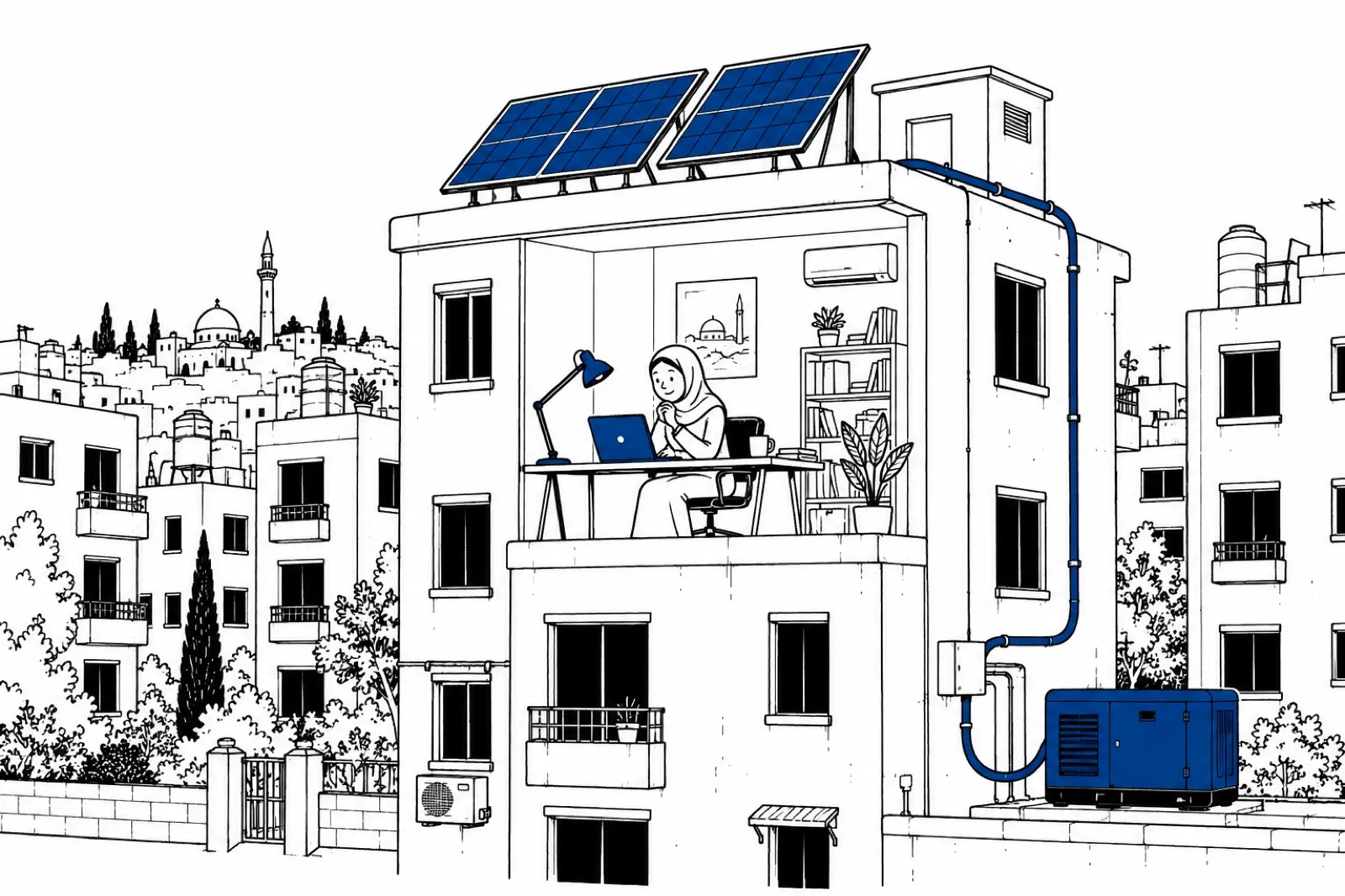
The same report notes that solar panels and diesel generators are a common sight in the city. Households and businesses that can afford backup buy backup. The ones that cannot, wait for the power to come back. A remote employee working from home inherits whichever of those two households they happen to live in. You do not get to choose, and from Riyadh or Jeddah you cannot even see which one you got.
The World Bank money tells you the real timeline
If the fix were close, you could wait for it. It is not close.
On 25 June 2025, the World Bank’s Board approved a US$146 million IDA grant for Syria, called the Syria Electricity Emergency Project. The money goes to rehabilitating high-voltage lines, including the 400 kV interconnectors to Jordan and Turkey, and to damaged substations. It is the Bank’s first project in the country in almost four decades.
The first engagement in four decades is emergency rehabilitation of transmission lines. That is what the starting point looks like. The project matters and it points the right way. It also tells you, in plain budget language, that the grid your hire depends on next quarter is the grid that exists today, not the one on the project map.
Plan for the present grid. Treat every improvement as upside.
Mobile data is the backup, until the towers lose power too
The usual counter is 4G. Keep the laptop charged, hotspot the phone, carry on. Sometimes that works, and we will not pretend otherwise.
On 18 November 2025, 963media reported that Syria’s communications minister said 5G had entered a pilot in Damascus. In the same report, a telecom engineer described the other half of the picture: power cuts drain tower batteries, and whole zones lose coverage. The mobile network runs on the same electricity as everything else in the building. When a district goes dark, its towers count down on batteries, and then they go quiet with it.
So the backup shares a single point of failure with the primary. A fallback that dies for the same reason as the main line is not a fallback. It is a delay.
The same clock as Riyadh, a different power supply
One thing works in your favour, and it is worth saying plainly. On 16 October 2026, Damascus and Riyadh sit on the same offset, UTC+3, with no daylight saving on either side. Your Damascus hire is in your standup, your sprint review and your support rota at the same hour as your Saudi team. No time-zone tax.
Which is exactly why the power question matters so much. The schedule overlap is a gift. A hire who shares your working day but drops out of it twice a week gives you the worst of both arrangements: the expectations of a colocated teammate, and the availability of a distant one.
What a cut costs you is not the electricity
The part that never shows up in a salary comparison is trust. When a home-based hire drops offline, you rarely know why. Was it the grid, the tower, the router, or the person? A manager in Riyadh sees a grey avatar and a missed meeting. Trust erodes in both directions, and it erodes fastest with your best people, because they know exactly why they are offline and cannot fix it.
One missed standup is nothing. A pattern of them rewrites how the whole team rates the Damascus hire, fairly or not. Retention is where this lands in the end. Across our managed teams, 89% of people are still in seat at 12 months, and a stable desk is a large part of how that number stays where it is.
A hosted desk turns a national problem into a building problem
You cannot fix Syria’s grid. You can decide it is not your problem to solve at the level of one employee’s apartment.
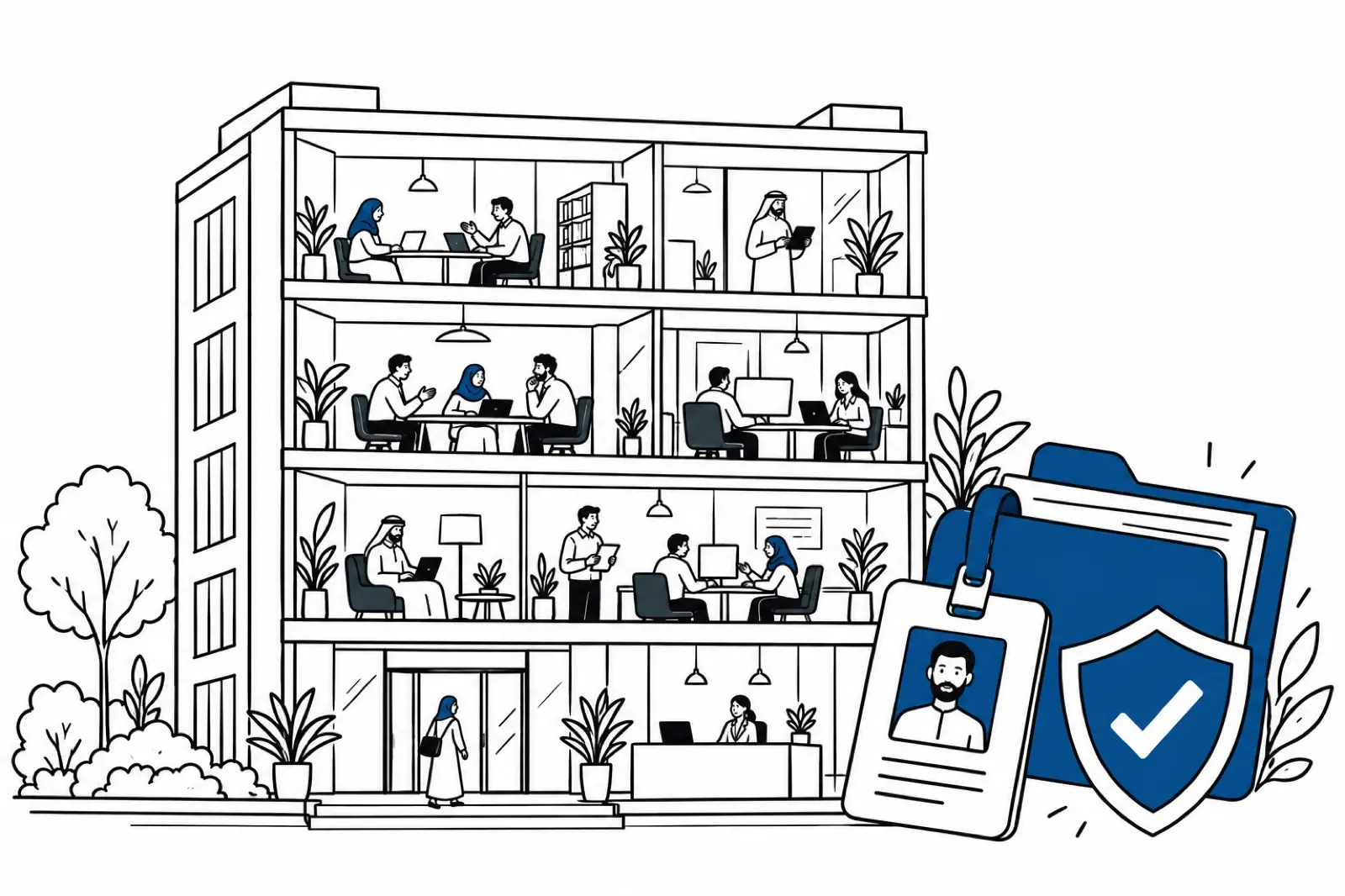
That is what remote employee hosting is for. In Remotya’s managed offices in Damascus, your hire sits at an equipped desk in a building with its own power and a second connectivity line, with IT on site. The person is legally employed under Remotya’s Syrian entity, so contracts, payroll and compliance sit with us. You direct the work. The grid does whatever it does outside, and the work continues inside.
The compliance side of that arrangement is laid out in how employee hosting handles compliance and logistics, and the cost shape against running your own space is in managed office spaces and the ROI math. Both come down to the same point. Power and connectivity are building-level problems, and a building is something an operator can actually manage. An apartment is not.
Our recommendation is direct. If the role is asynchronous research or writing, a home setup may hold. For a developer in your sprint ceremonies, an accountant on your close calendar, or a support agent on your shift rota, host them.
Hire for the talent, host for the grid
Damascus talent is worth the effort. The city’s electricity is not an objection to hiring there; it is a specification for how you hire. Employ through a Syrian entity, seat the person where the power is owned by someone accountable, and the five-hour windows stop being your concern.
Book a discovery call and we will walk you through what a hosted seat in Damascus includes, from the desk itself to the second line.
Sources
- Al Jazeera: Syria’s electricity has improved, but challenges remain (13 July 2026)
- World Bank: US$146 million grant to improve electricity supply in Syria (25 June 2025)
- 963media: Why Syrians still struggle to get online despite new digital projects (18 November 2025)
Questions readers ask
How many hours of electricity does Damascus get a day?
As of July 2026, state supply in Damascus arrives in blocks of five or six straight hours before a cut, according to Al Jazeera's reporting from residents. Households and businesses that can afford it run solar panels or diesel generators in the gaps.
Is mobile data a reliable backup for remote work in Syria?
Partly. 4G works in the main cities, but towers depend on the same grid. Telecom engineers report that power cuts drain tower batteries and whole zones lose coverage, so a hotspot fails at the same moment the router does.
What does a hosted desk at Remotya include?
An equipped desk in a managed Damascus office with its own power and a second connectivity line, on-site IT, and legal employment under Remotya's Syrian entity. You direct the person's work.
Can my hire in Damascus work from home instead?
For asynchronous work, sometimes. For anyone on your meeting schedule or shift rota, a home connection follows the grid, and the grid still cuts. We recommend a hosted seat for scheduled roles.